Before you choose
What you need to know about this experience
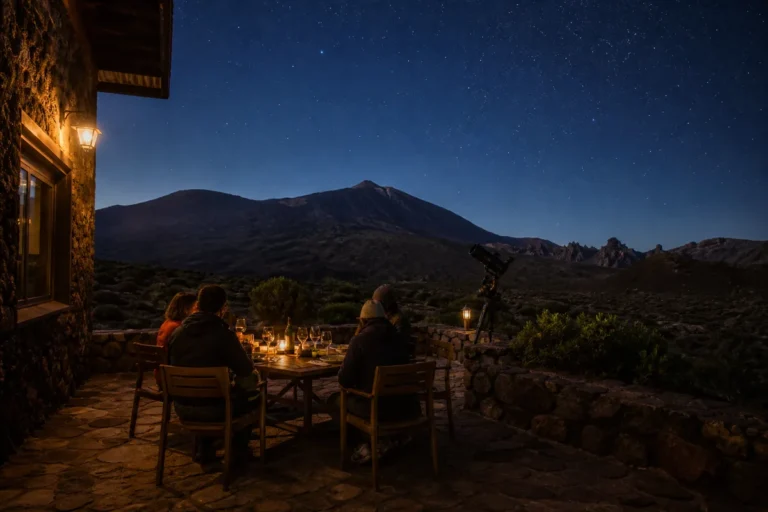
The Camino Barranco de Badajoz Starlight Park (Parque Estelar Starlight) is an astronomy outreach site in the Güímar Valley, in eastern Tenerife, certified by the Starlight Foundation in 2019. It organises night-sky observations, lunar crater sessions and special nights during meteor showers.
It is an alternative to stargazing on Teide for anyone who would rather not go to high altitude or is looking for a more educational, family-friendly format. This page explains what it offers and when it is a better choice than the national park.
At a glance
| Aspect | What to expect |
|---|---|
| What it is | Starlight park certified by the Starlight Foundation, dedicated to astronomy outreach |
| Where | Güímar Valley, next to the Barranco de Badajoz |
| Activities | Night-sky observation, lunar craters, meteor showers, daytime excursions |
| Equipment | Laser pointer, astronomical binoculars and telescope, depending on the activity |
| Format | Sessions scheduled on specific dates; they include an introductory presentation |
| Altitudee | Much lower than on Teide |
| Transport | Not generally included; you make your own way there |
| Price | Depends on the activity and the date |
What a Starlight Park is
The Starlight Foundation certifies as Starlight Parks places dedicated to observing and communicating astronomy. They do not have to be under extremely dark skies, but they must be suitable for observation and outreach.
The Camino Barranco de Badajoz appears on the Starlight Foundation’s official list, certified in 2019. It is part of a private project that presents itself as a Natural Reserve of Sky and Earth.
It should not be confused with the Teide Starlight Tourist Destination, which covers the national park and its surroundings. If you are looking for the darkest sky on the island, see stargazing in Tenerife.
Which activities it offers
According to the information published by the starlight park itself:
| Activity | What it involves |
|---|---|
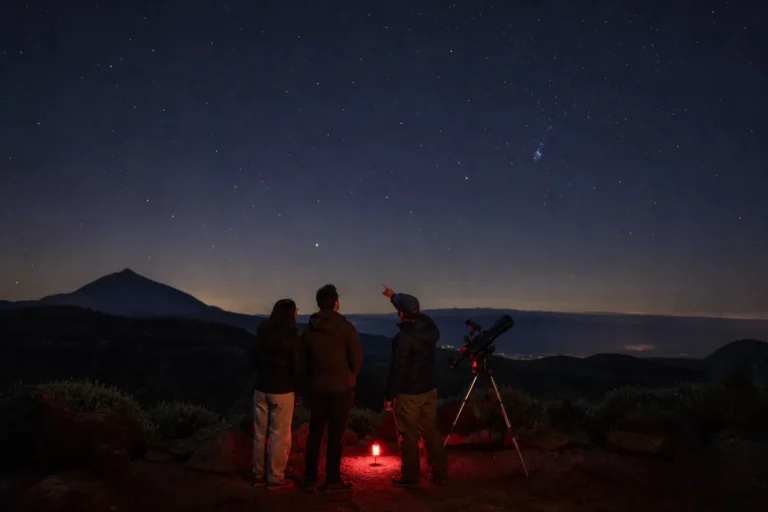
| Night-sky observation | Guided visit, introductory presentation and observation with a laser pointer and astronomical binoculars; includes stories and names of constellations from different cultures |
| Lunar craters | On nights when the Moon is visible, observation of its surface with binoculars and a telescope, after a presentation |
| Meteor showers | On dates such as the Perseids or Geminids, extended opening, often until the early hours |
| Daytime excursions | Outings to the Barranco de Badajoz and the Caserío de San Juan, with cultural and landscape content |
| Special days | Children’s activities about the Solar System, and talks |
Activities follow a calendar. Check the available dates before planning.
Who it suits
- Families with children, because of the educational format and the introductory presentation.
- People who should not go to high altitude, for health or comfort reasons.
- Travellers staying in the east or the metropolitan area, closer to Güímar than to Teide.
- Meteor shower enthusiasts, on the nights with extended opening.
- Anyone looking for cultural content as well as astronomy.
Who it may not suit, and what to weigh up
- Anyone looking for the darkest possible sky: Teide is above the sea of clouds and further from urban light.
- Anyone who wants plenty of telescope time: night-sky observation mainly uses a laser pointer and binoculars.
- Anyone who needs transport: you have to make your own way there.
- Nights with low cloud: at mid-altitude, the sea of clouds can cover the sky when Teide is clear.
Barranco de Badajoz compared with Teide
| Criterion | Barranco de Badajoz | Teide National Park |
|---|---|---|
| Altitudee | Mid-altitude | Over 2,000 m |
| Sky darkness | Good | Excellent, above the sea of clouds |
| Low cloud | Can affect it | Usually below the observer |
| Cold | Moderate | Intense at night |
| Format | Educational, on a calendar | Very varied: group, private, with dinner, photography |
| Equipment | Laser, binoculars, telescope depending on the activity | Telescopes in most offers |
| For families | Very suitable | Suitable, depending on minimum age and cold |
How to prepare
- Check the calendar of activities and the registration conditions.
- Ask about access: how to get there, where to park and whether the last stretch is on a track.
- Ask what happens if it is cloudy.
- Choose the activity according to the Moon: lunar craters when the Moon is visible; deep sky and the Milky Way without the Moon.
- If it is a meteor shower, expect the session to run long.
Safety and requirements
- Access: the surroundings are rural, in a ravine. Follow the park’s directions for getting there at night.
- Barranco de Badajoz: the ravine excursions take place by day. Check the trail conditions before you go, because closures for rockfall or wildfire risk can apply in natural areas in Tenerife.
- Light: use red light during the observation.
- Warm clothing: although it is less cold than on Teide, it gets cool at night.
Weather and time of year
- Sea of clouds: it can cover the sky at mid-altitude in the east. Check the forecast for low cloud.
- Meteor showers: the Perseids (August) and Geminids (December) are among the best known; the park organises special openings on those dates.
- Moon: choose a new Moon for the Milky Way and a visible Moon for the lunar craters.
Price
We do not give a figure: it depends on the activity and the date, and we could not verify a current published rate. Ask for the price of the specific activity when you request information.
What to bring
- Warm clothing.
- Closed shoes.
- A torch with a red light.
- Water.
- Your own binoculars, if you have them.
Alternatives and how to compare them
| If you are looking for… | Best option |
|---|---|
| Darker sky with a telescope on Teide | Stargazing in Tenerife |
| Sunset and stars with transport | Teide sunset and stargazing |
| Your group only | Private stargazing tour in Tenerife |
| Visiting a professional observatory, by day | Teide Observatory visit |
Frequently asked questions
What is the Barranco de Badajoz Starlight Park?
An astronomy outreach site in the Güímar Valley, certified as a Starlight Park by the Starlight Foundation in 2019.
Is it better than Teide for stargazing?
Teide has a darker sky because of its altitude. The Barranco de Badajoz is a good option if you would rather not go so high or want a family-friendly, educational format.
Are there telescopes?
Night-sky observation mainly uses a laser pointer and astronomical binoculars. The lunar crater sessions use a telescope.
Do they hold meteor shower nights?
Yes. On dates such as the Perseids or Geminids they stay open longer, often until the early hours.
Is it suitable for children?
Yes, the format is educational and includes an introductory presentation. Check the minimum age for each activity.
How do you get there?
On your own. Ask about access and parking before you go.
What happens if it is cloudy?
At mid-altitude, the sea of clouds can hide the sky. Ask about changing the date.