
Before you choose
What you need to know about this experience
A guachinche route is a guided outing with transport to visit one or more guachinches in the north of Tenerife: simple places linked to a vineyard, where the grower sells wine from their own harvest along with a few home-cooked dishes. Going with transport lets you try the wine without driving on the winding roads of the mid-altitude countryside (medianías).
Guachinches are regulated by a Canary Islands Government decree and have very specific conditions. This page explains what they really are, when they open and how to choose a route.
At a glance
| Aspect | What to expect |
|---|---|
| What it is | The grower’s own premises, selling their wine with home cooking |
| Where | Mainly in the north of Tenerife, in wine-growing areas |
| Season | They open seasonally, after the harvest; for a maximum of four months a year under the rules |
| Drinks | Only the grower’s own wine and water |
| Food | Up to three home-cooked dishes, plus pickles, nuts or fruit |
| Atmosphere | Informal and family-run |
| Transport | Highly recommended, so you do not drive after drinking |
| Price | Depends on the route, the number of stops and what you consume |
What a guachinche is under the rules
The Canary Islands Government’s Decreto 83/2013, published in the Boletín Oficial de Canarias on 9 August 2013, regulates this activity. Its conditions include:
- The wine must come from the owner’s vineyards and from their own harvest.
- The premises must be part of the house, winery or another agricultural building on the farm.
- Open for a maximum of four months a year, closing when the grower’s own wine runs out.
- Only up to three different dishes may be served as cooked food, plus pickles, nuts and local fruit.
- Drinks are limited to the grower’s own wine and water.
Places that open all year, offer a full menu or serve other people’s wine are not covered by the decree: legally they are restaurants, even if they advertise themselves as guachinches.
What you eat
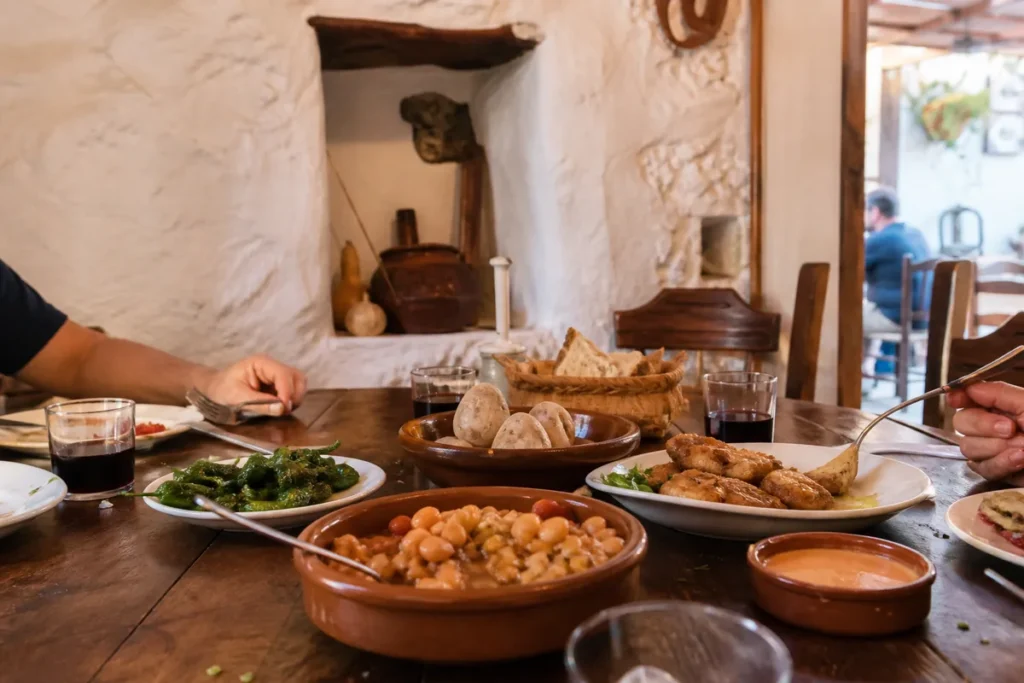
The food is usually simple and home-made: pork or goat, ribs with potatoes, papas arrugadas (Canarian wrinkly potatoes) with mojo, garbanzas (chickpea stew) or escaldón de gofio, depending on the house and the season. The menu is short band thew.
What a route involves
- Pick-up in your area.
- Visit to one or more guachinches in the wine-growing areas of the north.
- Home cooking and wine at each stop.
- Guide’s explanation of the tradition, the wine and the rules.
- Return.
Formats
| Format | Suits you if… |
|---|---|
| Shared route | You want to enjoy the atmosphere with other people |
| Private route | A group of friends or a family |
| Combined route | A guachinche as a stop within another excursion; see the Anaga and La Laguna excursion |
Who it suits
- Travellers looking for home cooking and a local atmosphere.
- Groups of friends.
- People interested in Tenerife’s wine culture.
Who it may not suit, and what to weigh up
- Anyone wanting a full menu or cocktails: you will not find them at a guachinche.
- Strict diets: the choice is very limited; ask about vegetarian options.
- Out of season: they may be closed.
- Under-18s: they can eat but not drink wine.
How to tell a genuine guachinche
- A menu of just a few dishes and only the grower’s own wine and water.
- Premises in a house, winery or farm building, not a commercial ground-floor unit.
- Open seasonally, not all year round.
- The rules provide for a distinctive plaque by the entrance.
How to choose well
- How many guachinches are visited?
- Are they regulated guachinches or guachinche-style restaurants?
- What does the price include? Food and wine, or only transport?
- What happens if the planned guachinches are closed because the wine has run out?
- Are there vegetarian options?
- Pick-up area and return time?
What is usually included and what to check
| Item | Usual practice | Check |
|---|---|---|
| Transport | Included | Pick-up area |
| Guide | Included | Language |
| Food and wine | Depends on the route | What is included |
| Plan B | Varies | If a guachinche closes |
Safety
- Do not drive after drinking. The roads in the mid-altitude countryside are narrow and winding.
- Allergies: tell each place; the cooking is home-style.
Season
Guachinches open after the harvest and close when the wine runs out, for a maximum of four months a year under the rules. The exact dates vary from one house to another. Ask the provider which ones are open on your date.
Price: what it depends on
We do not give a reference figure.
- Number of stops.
- Food and wine included, or paid at each place.
- Shared or private format.
What to bring
- Cash: some guachinches do not accept cards.
- A light jacket for the north.
- An appetite and time to take it easy.
Alternatives and how to compare them
| If you are looking for… | Best option |
|---|---|
| Tasting a variety of Canarian produce | Tenerife food tour |
| Wineries with a guided tasting | Tenerife wine route |
| Learning to make mojo | Canarian mojo workshop |
| Anaga and La Laguna with a lunch stop | Anaga and La Laguna excursion |
Frequently asked questions
What is a guachinche?
The grower’s own premises, linked to their farm, where they sell wine from their own harvest with a few home-cooked dishes. It is regulated by the Canary Islands’ Decreto 83/2013.
When do guachinches open?
Seasonally, after the harvest, and for a maximum of four months a year under the rules.
What do you drink at a guachinche?
Only the grower’s own wine and water.
How many dishes are there?
Up to three home-cooked dishes, plus pickles, nuts or fruit.
Are all places called guachinche the real thing?
No. Those that open all year, have a full menu or sell other people’s wine are legally restaurants.
Do you need to go by car?
They are usually in rural areas. If you are going to drink, a route with transport is better.
Do they accept cards?
Not always. Bring cash.